
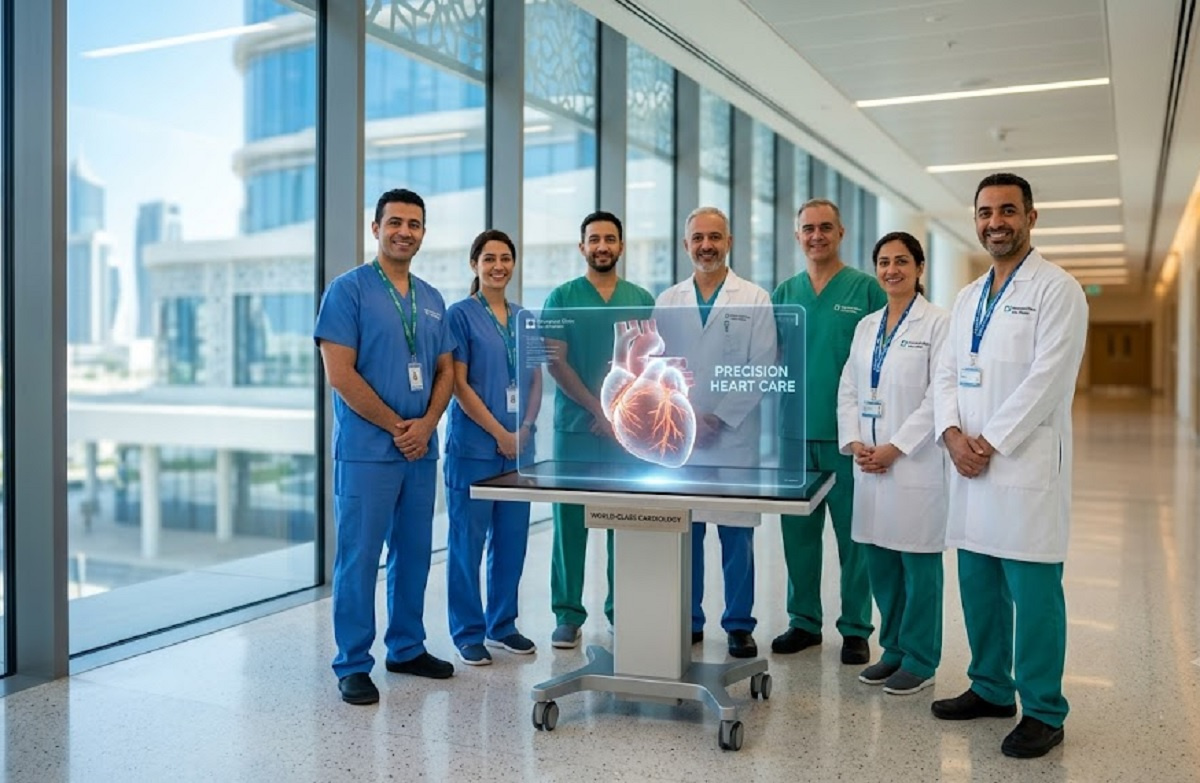
TL;DR: Abu Dhabi’s heart transplant program, run by Cleveland Clinic Abu Dhabi’s Heart, Vascular & Thoracic Institute, was the UAE’s first heart transplant service and remains its only multi-organ transplant center, with 386 transplants completed since 2017. The program covers the full journey — heart failure diagnosis, LVAD support, transplant surgery, and lifelong follow-up — under one multidisciplinary team. Evaluation is rigorous, wait times depend on organ matching rather than payment, and UAE federal law strictly regulates donation to prevent trafficking. Survival outcomes have improved significantly worldwide, though a transplant trades one chronic condition for another requiring lifelong management.
A heart failure diagnosis changes everything, and for many patients, medication and lifestyle changes eventually stop being enough. That’s the point where a heart transplant program becomes a lifeline rather than a last resort. Families searching for heart transplant Abu Dhabi options are usually trying to answer one question fast: is there a center nearby with the experience, the technology, and the track record to get this right? The good news is that the region now has a program built specifically to answer that question.
Abu Dhabi’s leading heart transplant program is run by the Heart, Vascular & Thoracic Institute at Cleveland Clinic Abu Dhabi. It was the UAE’s first heart transplant service, remains the country’s only multi-organ transplant facility, and has completed 386 transplants since launching in 2017. The program combines heart failure management, LVAD implantation, and full transplant surgery under one multidisciplinary team.
What Is a Heart Transplant Program?
A heart transplant program is a coordinated, multidisciplinary medical service that manages every stage of advanced heart failure care — from diagnosis and medical therapy, through mechanical support devices, to the transplant surgery itself and lifelong follow-up. It brings together heart failure cardiologists, transplant surgeons, anesthesiologists, immunologists, dietitians, and psychologists, because a successful transplant depends on far more than the operation. Candidacy assessment, donor matching, surgical timing, and post-transplant immunosuppression all have to work together, which is why these programs are typically housed at large academic hospitals rather than general cardiac units.
Understanding Heart Failure and When Transplant Becomes Necessary
Heart failure, sometimes called cardiomyopathy, is what happens when the heart muscle weakens to the point where it can no longer pump enough blood to meet the body’s demand for oxygen. It’s progressive by nature, and it rarely has a single cause. Common contributors include:
- High blood pressure
- Coronary artery disease
- Diabetes
- Tobacco and alcohol use
- Sleep apnea
- Congenital heart defects
- Viral infections
- Heart rhythm abnormalities (arrhythmia)
- Obesity
- Heart valve disease
- Family history and genetic cardiomyopathies
Most patients start with lifestyle changes and medication. When those stop controlling symptoms — shortness of breath at rest, fluid retention, repeated hospitalizations — doctors move to more advanced options: implantable devices, mechanical pumps, and eventually transplantation for patients whose heart failure has reached its end stage.
Summary: Heart failure is a long-term, worsening condition with many possible causes. Transplant is considered only after non-surgical and device-based treatments no longer control the disease.
Inside Abu Dhabi’s Heart Transplant Program
The Heart transplant program at Cleveland Clinic Abu Dhabi sits within the hospital’s Heart, Vascular & Thoracic Institute. Rather than functioning as a single surgical service, it operates as a full continuum of care: prevention counseling, heart failure diagnosis, medical management, mechanical circulatory support, transplant surgery, and post-transplant follow-up all happen under one coordinated team.
That team includes cardiac surgeons trained specifically in transplantation, heart failure cardiologists, and specialists in implanting and managing artificial heart pumps. This structure matters clinically — a program that only performs the surgery, without the surrounding infrastructure for organ matching, immunosuppression management, and long-term monitoring, tends to produce weaker outcomes over time.
The UAE’s First and Only Multi-Organ Transplant Center
This program holds a notable distinction in the region: it performed the UAE’s first heart transplant and remains the country’s first and only multi-organ transplant facility. Since launching in 2017, the broader transplant program has completed 386 organ transplants, drawing patients from across the Gulf and wider region who previously had to travel to Europe, the US, or India for advanced transplant care.
Being a multi-organ center isn’t just a marketing point — it means the hospital has already built the infrastructure that transplant medicine depends on: organ preservation logistics, immunology labs, dedicated transplant ICU capacity, and surgical teams who operate on complex cases regularly enough to stay sharp.
Summary: A regional-first multi-organ program signals depth of infrastructure, not just a single successful case. Consistency and case volume are strong indicators of transplant program maturity.
How the Evaluation and Waiting List Process Works
Transplant evaluation is thorough by design, because the surgery carries lifelong consequences and donor hearts are scarce. A typical evaluation includes:
- Cardiac assessment — echocardiograms, right-heart catheterization, and stress testing to confirm the heart failure stage.
- General health screening — kidney and liver function, cancer screening, infection screening, and dental clearance, since infections and comorbidities can disqualify or delay a candidate.
- Psychosocial evaluation — assessing support systems and the ability to manage lifelong medication adherence, since missed immunosuppressant doses are a leading cause of rejection.
- Multidisciplinary committee review — a formal panel weighs the results and decides on transplant listing.
- Waitlist placement — patients are matched by blood type, body size, and urgency once listed, with donor organs allocated according to national transplant registry rules.
Wait times vary widely and depend on blood type, antibody sensitization, and how sick the patient is at the time of listing.
LVAD Therapy: Bridge to Transplant or Destination Therapy
Not every heart failure patient goes straight from medication to transplant. Many are supported first by a Left Ventricular Assist Device (LVAD) — a mechanical pump that takes over part of the heart’s pumping work. This program runs a dedicated implantable durable LVAD service, used in two distinct ways:
- Bridge to transplant: keeping a patient stable and functional while they wait for a matching donor heart.
- Destination therapy: for patients who are not transplant candidates, the LVAD becomes the long-term treatment itself, rather than a temporary step.
LVAD technology has improved significantly over the past decade, with smaller, quieter pumps and better battery life, which has made destination therapy a realistic long-term option rather than a stopgap.
Surgery and the Recovery Timeline
A heart transplant typically takes several hours under general anesthesia. The failing heart is removed and replaced with the donor heart, which is then connected to the major blood vessels. Most patients spend the first days after surgery in a dedicated transplant ICU, followed by one to three weeks of general hospital recovery, depending on how the body responds.
Early recovery focuses on three things: preventing infection, monitoring for signs of organ rejection through regular heart biopsies, and calibrating immunosuppressant medication doses. Cardiac rehabilitation usually begins within weeks, helping patients rebuild strength and stamina gradually.
Summary: Recovery isn’t a single event — it’s a monitored process where biopsy schedules and medication adjustments in the first year matter as much as the surgery itself.
Life After a Heart Transplant
Life after transplant is a long-term partnership between the patient and the transplant team. Patients take immunosuppressant medication indefinitely to prevent the immune system from attacking the new heart, alongside regular blood tests, periodic biopsies, and annual imaging to monitor for complications like transplant-related coronary artery disease.
Most patients return to normal daily activity, and many go back to work or study within a few months. Long-term success depends heavily on medication adherence, infection precautions, and consistent follow-up — this isn’t a treatment you complete once and move on from.
Risks, Rejection, and Long-Term Outcomes
Every transplant carries risk, and honest programs discuss this openly rather than glossing over it. The main risks include:
- Acute rejection, especially in the first year, when the immune system is most likely to attack the new organ
- Infection, since immunosuppressant drugs reduce the body’s natural defenses
- Cardiac allograft vasculopathy, a form of coronary artery disease specific to transplanted hearts, which develops gradually over years
- Side effects of long-term immunosuppression, including increased risk of certain cancers and kidney strain
Internationally, outcomes have improved substantially since the first heart transplants in the 1960s. Registry data compiled from transplant centers worldwide generally puts one-year survival above 85%, with roughly two-thirds of recipients surviving at least five years — figures that continue to improve as surgical technique, organ preservation, and anti-rejection drugs advance. These are population-level statistics, not guarantees, and individual outcomes depend on age, underlying condition, and how well rejection is managed.
The Legal Framework for Organ Donation in the UAE
Heart transplantation in the UAE operates under a clear federal legal structure. Organ donation and transplantation is regulated nationally, most recently under updated Federal Decree-Law provisions concerning the donation and transplantation of organs and tissues, which followed the original Federal Decree-Law No. 5 of 2016. The law:
- Prohibits buying or selling human organs under any circumstance
- Requires transplant facilities and physicians to be formally licensed
- Establishes a National Centre to oversee donor registration and fair organ distribution
- Allows both living and deceased donation, with deceased donation requiring brain-death confirmation by a panel of specialist physicians
Residents can register as organ donors through the national “Hayat” program, and eligibility to donate after brain death is open to UAE residents of any nationality holding an Emirates ID. This legal clarity is part of why international patients feel confident pursuing transplant care in the country rather than navigating less regulated systems abroad.
Summary: Federal law bans organ trafficking, requires licensed facilities, and formalizes brain-death confirmation — a framework designed to protect both donors and recipients.
Why Patients Choose This Program
For patients comparing options across the region, a few factors consistently come up. This is the heart transplant center Abu Dhabi patients point to most often because it combines surgical experience with the surrounding infrastructure transplant care depends on — accredited transplant ICU capacity, an active LVAD program, and a multidisciplinary heart failure team that manages patients long before and long after surgery. For many families, the alternative used to mean months of travel and paperwork to seek care overseas; having an accredited program regionally removes that burden at an already difficult time.
Heart Transplant vs. LVAD vs. Medical Therapy
| Factor | Medical Therapy | LVAD | Heart Transplant |
|---|---|---|---|
| Best for | Early to moderate heart failure | Advanced heart failure, bridge or destination | End-stage heart failure, transplant-eligible patients |
| Invasiveness | None to minimal | Surgical implant | Major open-heart surgery |
| Long-term commitment | Daily medication | Device maintenance, battery management | Lifelong immunosuppression and monitoring |
| Availability | Immediate | Scheduled once approved | Depends on donor organ availability |
| Typical outcome goal | Slow disease progression | Restore pumping function | Replace the failing organ entirely |
Common Misconceptions
Online forums and patient communities repeat a few myths worth correcting.
“A transplant is a cure.” It replaces the failing organ, but patients trade one chronic condition for another — lifelong immune suppression and monitoring.
“Waitlists are mainly about money or connections.” Allocation is governed by blood type, body size compatibility, and medical urgency under national registry rules, not by ability to pay.
“LVADs are only a temporary fix.” For patients who aren’t transplant candidates, an LVAD can serve as the definitive long-term treatment, not just a bridge.
What experienced patients recommend: join a support group before surgery, ask the transplant coordinator direct questions about biopsy schedules, and treat medication adherence as non-negotiable from day one.
Cost and Insurance Considerations
Transplant costs vary by case complexity, length of hospital stay, and whether LVAD support is needed beforehand. Most patients coordinate financing through health insurance, and this program works with a wide range of insurance partners in the UAE market, alongside self-pay and international patient financial counseling services for those traveling from abroad. It’s worth confirming transplant-specific coverage limits with your insurer early, since pre-transplant workup, the surgery, and years of follow-up care and medication are typically billed separately.
This article provides general information and is not medical or financial advice. Consult a qualified physician or your insurance provider for guidance specific to your situation.
People Also Ask
Is heart transplant available in the UAE? Yes. The UAE performed its first heart transplant through this Abu Dhabi program, which remains the country’s only multi-organ transplant facility.
How long is the wait for a heart transplant? Wait times depend on blood type, body size matching, antibody sensitization, and how urgently the patient needs the organ. There’s no fixed timeline nationally or internationally.
Can international patients get a heart transplant in Abu Dhabi? Yes, the program accepts patients from across the region and offers international patient support services to coordinate evaluation, travel, and financial counseling.
What disqualifies someone from a heart transplant? Active uncontrolled infection, certain active cancers, severe irreversible damage to other organs, and an inability to adhere to lifelong medication are common disqualifying factors, though each case is reviewed individually.
Is an LVAD better than a transplant? Neither is universally “better” — they serve different situations. LVADs support patients who aren’t transplant candidates or who are waiting for a donor organ; transplant replaces the heart entirely for eligible patients.
FAQs
What is the heart transplant program at Cleveland Clinic Abu Dhabi known for?
It’s recognized as the UAE’s first heart transplant service and the country’s first and only multi-organ transplant facility, having completed 386 transplants since its 2017 launch. The program combines heart failure management, LVAD implantation, and transplant surgery within one multidisciplinary Heart, Vascular & Thoracic Institute team, rather than treating transplant as an isolated procedure.
How do doctors decide if someone needs a heart transplant?
Transplant is considered only after medication, lifestyle changes, and often an LVAD have failed to control advanced heart failure symptoms. Doctors evaluate ejection fraction, hospitalization frequency, and overall organ function before referring a patient for formal transplant evaluation and eventual waitlist placement.
What happens during the transplant evaluation process?
Evaluation covers cardiac testing, screening for infections and other organ dysfunction, and a psychosocial assessment of the patient’s support system and ability to manage lifelong medication. A multidisciplinary committee then reviews all findings before approving waitlist placement.
Is organ donation legal and regulated in the UAE?
Yes. Organ donation and transplantation are governed by federal law, which bans buying or selling organs, requires licensed facilities and physicians, and establishes a national registry system. Deceased donation requires brain death to be confirmed by a panel of specialist physicians before any organ can be transplanted.
How long does recovery take after heart transplant surgery?
Most patients stay in a transplant ICU for the first few days, followed by one to three weeks of hospital recovery. Cardiac rehabilitation typically starts within weeks of discharge, and full return to normal activity often takes several months, with lifelong follow-up continuing after that.
What is the survival rate after a heart transplant?
International registry data generally shows survival above 85% at one year and roughly two-thirds of recipients surviving at least five years, though outcomes vary by age, underlying condition, and how consistently rejection is monitored and managed.
Do I need to travel to Abu Dhabi for evaluation, or can some steps be done remotely?
Initial referrals and record review can often begin remotely through international patient services, but the formal transplant evaluation, including in-person testing and the multidisciplinary committee review, generally requires being physically present at the treating hospital.
What’s the difference between an LVAD and a full heart transplant?
An LVAD is a mechanical pump that assists a weakened heart without removing it, used either temporarily while awaiting transplant or permanently as destination therapy. A heart transplant fully replaces the failing organ with a donor heart and requires lifelong immunosuppression afterward.
Choosing where to pursue heart transplant care is one of the heaviest decisions a family can face, and it deserves clear, unembellished information rather than marketing language. What matters clinically is program maturity: case volume, multidisciplinary infrastructure, an active LVAD service, and transparent long-term outcome monitoring. Abu Dhabi’s program checks each of those boxes as the region’s first and only multi-organ transplant facility. Whatever stage of heart failure you or a loved one are navigating, the right next step is a direct conversation with a heart failure specialist who can assess your specific case.
Key Takeaways
- This is the UAE’s first heart transplant program and its only multi-organ transplant facility
- 386 transplants completed since the program’s 2017 launch
- LVAD therapy is available both as a bridge to transplant and as standalone destination therapy
- UAE federal law bans organ trafficking and requires licensed facilities and brain-death confirmation
- Global one-year survival after heart transplant generally exceeds 85%, though individual outcomes vary